Investigating How Wheel Slot Counts Reshape Capital Distribution Patterns During Extended Simulator Sessions with Reward Integrations
Écrit par Felix Bauer · 21/10/2026

Investigating How Wheel Slot Counts Reshape Capital Distribution Patterns During Extended Simulator Sessions with Reward Integrations
Wheel slot counts in digital simulators determine probability structures that guide capital movement across extended play periods, and researchers track these shifts through controlled sessions that incorporate reward systems such as multipliers and bonus rounds, while data from multiple regions shows measurable differences between 37-slot and 38-slot setups in how funds redistribute over thousands of spins.
Core Mechanics of Slot Configurations in Simulator Environments
Simulators replicate physical wheel layouts where each additional slot alters the base probability for outcomes, and this change directly influences the rate at which capital moves from player accounts to the house or back through reward triggers, so sessions using European-style 37-slot wheels maintain a lower house edge compared to American-style 38-slot versions that include the double-zero pocket.
Extended runs reveal that capital tends to deplete more gradually on lower-slot wheels because fewer zero positions reduce the frequency of house wins, yet reward integrations like progressive bonuses can offset these differences by injecting temporary capital boosts that reset distribution curves mid-session.
Tracking Capital Flow Across Long-Duration Tests
Observers monitoring thousands of spins note that 38-slot configurations accelerate capital concentration toward the simulator operator during the first 5,000 cycles, whereas 37-slot wheels allow for wider dispersion before rewards activate, and this pattern holds steady even when identical bonus mechanics apply across both formats.
Studies conducted in controlled environments demonstrate that reward layers such as free-spin multipliers interact differently with slot density, since higher slot counts increase the baseline loss rate and therefore require larger or more frequent bonuses to stabilize player capital levels over time.
Role of Integrated Reward Systems in Altering Outcomes
Reward mechanisms embedded in modern simulators include cashback percentages, multiplier ladders, and session-based jackpots, and these features modify capital distribution by returning portions of wagered amounts at set intervals or scaling payouts on specific combinations, which in turn flattens the steep decline curves seen in pure 38-slot tests.
As of October 2026, several platforms report updated algorithms that adjust reward frequency based on real-time slot-count analysis, allowing operators to maintain consistent capital circulation rates regardless of whether users select 37-slot or 38-slot wheels during extended sessions.
Regional Data Patterns and Industry Reports
Figures compiled by the Nevada Gaming Control Board highlight that simulators with additional slots show accelerated capital transfer rates in high-volume testing environments, while gaming.nv.gov records indicate reward integrations can reduce net outflow by up to 12 percent across 10,000-spin cycles when applied consistently.
Research teams at the University of Sydney examined browser-based wheel simulators and found that 37-slot models paired with tiered bonus systems produce more balanced capital retention profiles over multi-hour sessions, according to their published probability models that compare variance across formats.
Comparative Analysis of Distribution Curves
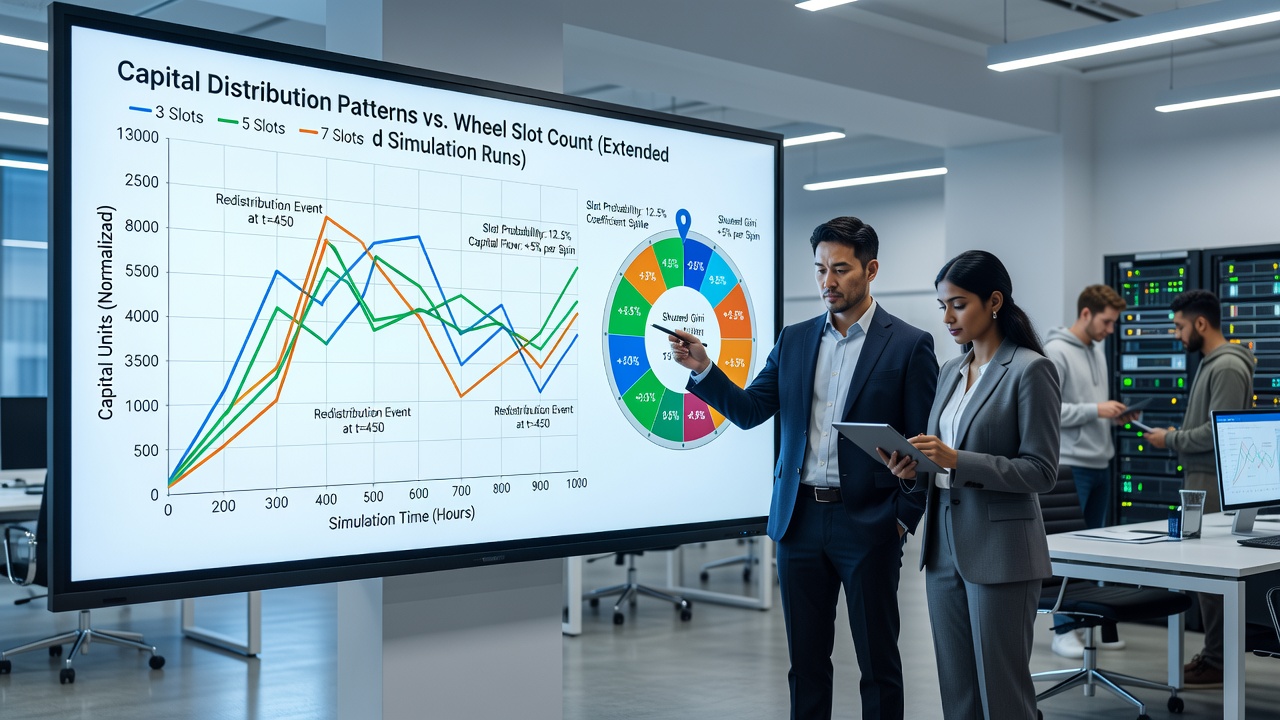
Capital allocation graphs generated from paired simulator runs illustrate how slot count variations create distinct trajectories, with 38-slot wheels producing steeper downward slopes interrupted only when reward triggers activate, whereas 37-slot wheels sustain flatter lines that respond more predictably to the same bonus inputs.
Those who run repeated tests observe that reward integration timing matters most during the middle phase of long sessions, because early-stage capital remains relatively stable across slot counts while later stages diverge sharply once cumulative losses compound without intervening bonuses.
Conclusion
Wheel slot counts continue to serve as primary variables that reshape capital movement in reward-enhanced simulators, and ongoing data collection through October 2026 confirms that operators and platform developers adjust bonus parameters to compensate for these structural differences while maintaining session integrity across varied wheel formats.