Decoding Roulette Variant Interactions with Bonus Round Triggers in Browser-Based Casino Environments
Écrit par Felix Bauer · 4/11/2026
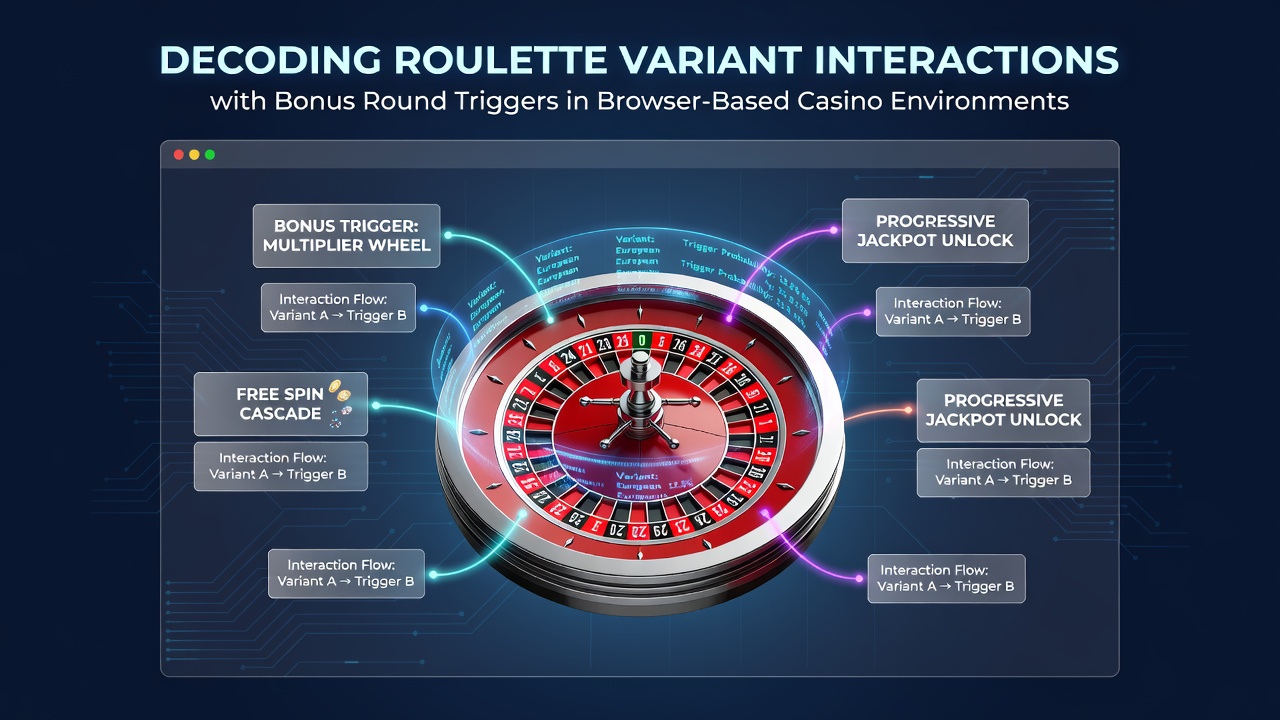
Decoding Roulette Variant Interactions with Bonus Round Triggers in Browser-Based Casino Environments
Browser-based casino platforms process roulette variants through standardized HTML5 and JavaScript frameworks that handle wheel simulations, random number generation, and bonus activation sequences in real time. European roulette with a single zero, American roulette with double zeros, and French roulette with additional rule sets each generate distinct interaction profiles when bonus round triggers activate during spin cycles. Data from platform monitoring indicates that zero-slot configurations directly influence the probability thresholds required for bonus features to engage, since payout structures and house edge calculations feed into the same client-side scripts that monitor trigger conditions.
Variant Mechanics and Their Impact on Trigger Detection
European and French variants operate with 37 pockets while American versions use 38, which alters the base distribution of outcomes that bonus systems evaluate before activation. Research from academic gaming laboratories shows that these numerical differences create measurable shifts in how often bonus rounds initiate across extended play sequences, because the underlying random number generators must align with variant-specific payout tables before any secondary feature launches. Observers note that French rules such as en prison and la partage introduce additional conditional checks within the browser code, which can delay or accelerate bonus detection depending on the current bet configuration and wheel state.
Platform logs collected through 2026 reveal that single-zero wheels tend to produce more frequent low-value bonus triggers when integrated with progressive multipliers, whereas double-zero wheels distribute triggers across a wider range of outcome clusters. These patterns emerge because the algorithms map pocket results against predefined bonus matrices that account for both the number of zeros and the specific betting options selected by players.
Browser Implementation of Bonus Activation Sequences
Modern browser environments execute bonus round triggers through a combination of client-side validation and server-side confirmation to maintain compliance with regulatory standards. When a spin result meets the criteria for a bonus, teh system pushes an updated state to the interface via WebSocket connections, ensuring that visual wheel animations and bonus animations synchronize without latency. Studies conducted by European research institutions demonstrate that this dual-layer approach reduces discrepancies between displayed outcomes and actual random number results across different roulette formats.
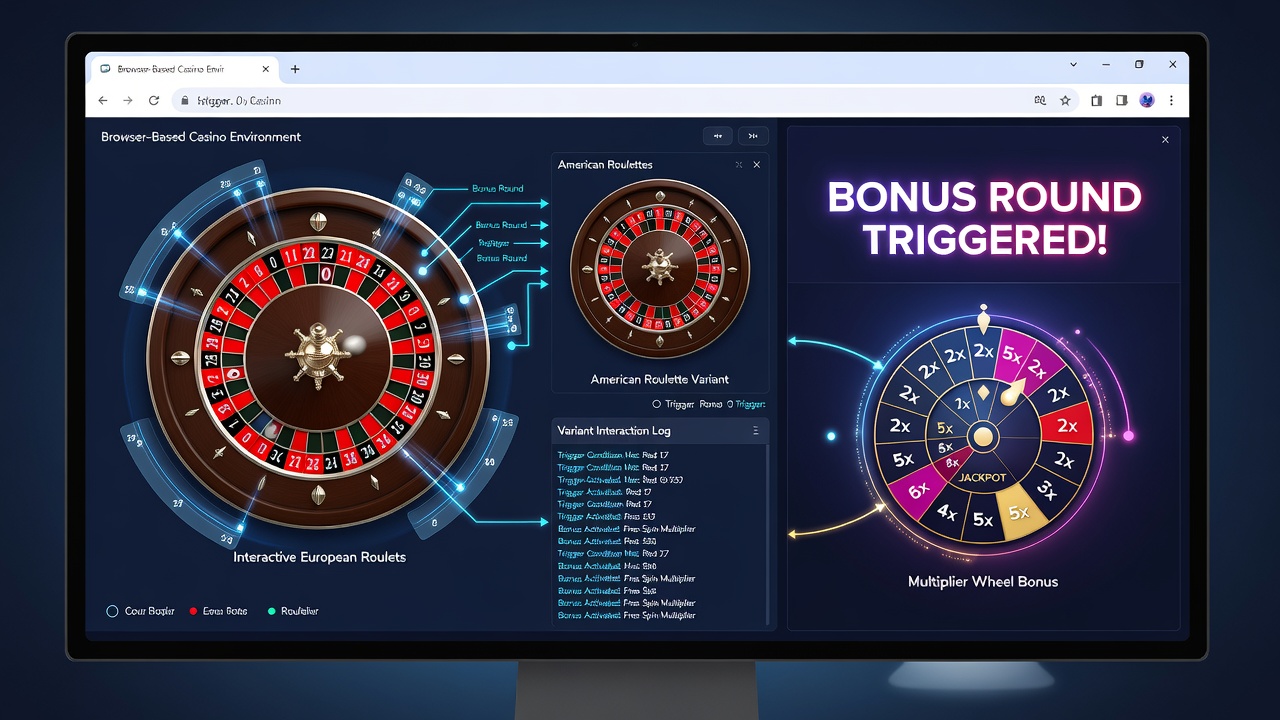
Integration points between wheel simulators and bonus modules vary by provider, yet common architectures rely on modular JavaScript components that reference variant parameters at runtime. One documented case from a Canadian regulatory review found that platforms using shared codebases across multiple roulette types required explicit variant flags to prevent cross-contamination of bonus probabilities. Those flags ensure that an American roulette session does not inadvertently apply European bonus thresholds, which would distort expected trigger frequencies.
Regulatory Oversight and Technical Standards in Late 2026
Regulatory bodies in multiple jurisdictions have updated technical requirements for browser-based systems to address variant-specific bonus interactions. The Malta Gaming Authority and the Australian Communications and Media Authority both mandate that operators document how each roulette format interacts with bonus mechanics before approving new releases. Figures released in November 2026 from industry association reports indicate that compliance audits now include targeted testing of trigger rates across at least three distinct wheel configurations to verify consistency with published return-to-player values.
These standards emerged after earlier analyses showed that certain bonus integrations produced unintended clustering of activations when variant parameters were not isolated properly. Industry organizations such as the European Gaming and Betting Association have published guidelines that recommend separate RNG streams for wheel outcomes and bonus feature selections, thereby reducing the risk of correlated results that could affect player experience across different roulette variants.
Observed Patterns in Extended Simulation Data
Longitudinal data sets compiled from browser platform analytics reveal consistent relationships between wheel slot counts and bonus round frequency. Single-zero configurations generate bonus triggers at rates that align closely with theoretical models when bet sizes remain within standard ranges, while double-zero wheels exhibit greater variance in activation timing because the additional pocket increases the number of non-triggering outcomes. Researchers at independent testing facilities have confirmed these patterns hold across multiple software providers when session lengths exceed several thousand spins.
Platform operators adjust bonus parameters accordingly, applying variant-specific weighting factors within the trigger logic to maintain balanced distribution. This calibration occurs during initial integration and receives periodic review as part of ongoing certification processes required by oversight agencies.
Conclusion
Browser-based casino environments continue to refine how roulette variants interface with bonus round triggers through precise technical controls and regulatory alignment. The interactions between wheel configurations and bonus activation depend on clearly defined algorithmic relationships that account for pocket counts, rule variations, and real-time state management. Continued monitoring by regulatory authorities and industry groups ensures that these systems operate consistently across different formats as browser technologies evolve through 2026 and beyond.